Mining the Archive: How Repurposing Old Content Became the Smartest SEO Move of 2025
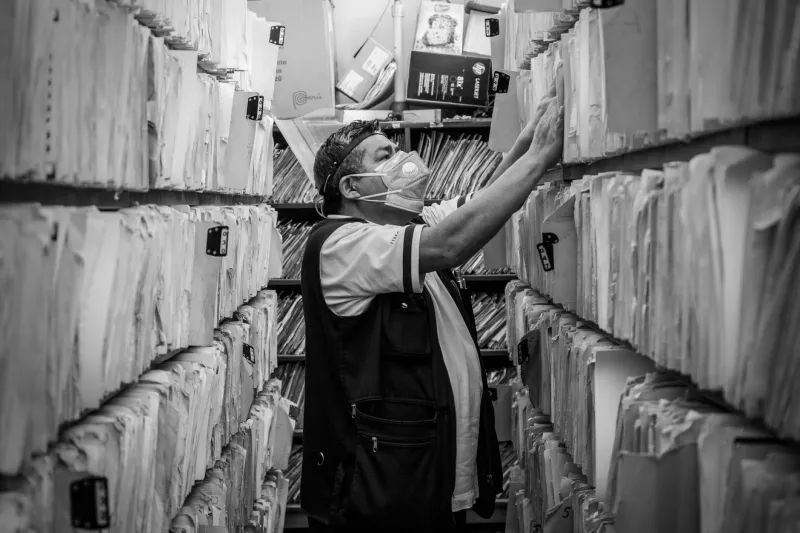
Every business with a decade-old website has the same digital attic: hundreds of blog posts no one has read since 2019, product guides that reference discontinued offerings, and landing pages that were abandoned mid-campaign. The prevailing instinct is to either ignore this material or delete it. Both instincts are expensive mistakes.
At SEO Salvo, we refer to this accumulated inventory as salvageable content — and we believe it represents the single most underutilized asset in American digital marketing. Rather than commissioning yet another round of new blog posts, the sharper play is to audit what you already own, extract what still holds value, and rebuild it into formats that today's search landscape actually rewards.
The Hidden Economics of Old Content
Consider the arithmetic. A mid-sized US company publishing two posts per week for five years has produced roughly 500 pieces of content. Industry research consistently shows that a large share of organic traffic to mature sites comes from a small fraction of pages — often fewer than 10 percent. The remainder isn't worthless; it's dormant.
Each dormant page carries three forms of embedded value: the crawl history Google has already recorded, any backlinks accumulated over the years, and topical signals that contribute to your site's overall authority. Deleting these pages discards that equity. Rewriting from scratch duplicates the cost you already paid. Repurposing, by contrast, treats the original as raw material.
Running a Salvage Audit
The first step is a disciplined inventory. Export every URL from your content management system and sort pages into four categories using your analytics data:
- Performers — pages ranking on page one. Leave these alone except for periodic refreshes.
- Strugglers — pages stuck between positions 11 and 30. These are prime salvage candidates; they have proven demand but insufficient quality or relevance.
- Orphans — pages with no internal links pointing to them. Search engines may not even know they exist.
- Decay cases — once-strong pages that have lost rankings over 12 to 24 months, typically after a core update.
For a typical US service business — a regional law firm in Ohio, a dental group in Arizona, a logistics company in Texas — this audit usually surfaces between 30 and 60 pages worth rescuing. That is a content pipeline you already paid to build.
Converting Waste Into Working Assets
Salvage is not the same as touching up a headline. The most effective conversions change the page's fundamental format to match current search intent:
FAQ pages. Older blog posts often bury answers to questions customers still ask. Extracting those answers into structured FAQ format — with proper schema markup — positions the content for featured snippets and voice search results.
Comparison pages. Two or three dated posts about adjacent topics can be merged into a single comparison page. "Our software vs. spreadsheets" content from 2021, refreshed and consolidated, often targets commercial-intent queries far more effectively than the originals did.
Local landing pages. A generic service page can be salvaged into location-specific variants. A remodeling contractor with one national page and a decade of project photos can build genuinely useful city-level pages — a core Local SEO play for businesses serving metro areas like Dallas, Charlotte, or Phoenix.
Comprehensive guides. Five thin posts on a single theme can be consolidated into one definitive resource. Consolidation concentrates internal link equity and eliminates the thin-content dilution that core updates penalize.
Measuring the Lift
Salvage-first optimization is measurable within weeks, not quarters. Track three indicators: average position for the target queries, impressions in Google Search Console, and click-through rate at the page level. In our experience, a properly salvaged struggler page — one already ranking between positions 11 and 30 — can reach page one within 30 to 60 days, because Google has already validated the topic relevance. New pages must earn that validation from zero.
The financial comparison is equally stark. Producing a new 2,000-word article typically costs more than rebuilding an existing one, and the new page starts with no links, no crawl history, and no ranking history. The salvaged page starts with all three.
A Sustainable Operating Model
The businesses winning in organic search in 2025 are not publishing more. They are maintaining a disciplined rotation: quarterly archive audits, a fixed quota of salvage operations each month, and new content reserved for genuinely new topics where no existing asset can be repurposed.
Your archive is not a liability gathering dust. It is a reserve of pre-paid assets waiting for a second deployment. The companies that treat it that way will compound their search visibility while their competitors keep paying full price for blank pages.